

Many families struggle with financial management, caught between competing priorities and guilt-laden spending habits. “Budget Like a Mum” strips away the complexity, offering straightforward tactics for household money management. From tracking actual expenses to negotiating bills, the guide addresses real challenges families face. Yet the real question remains: can discipline alone transform financial chaos into stability?
Cut the Guilt, Find Your Actual Priorities
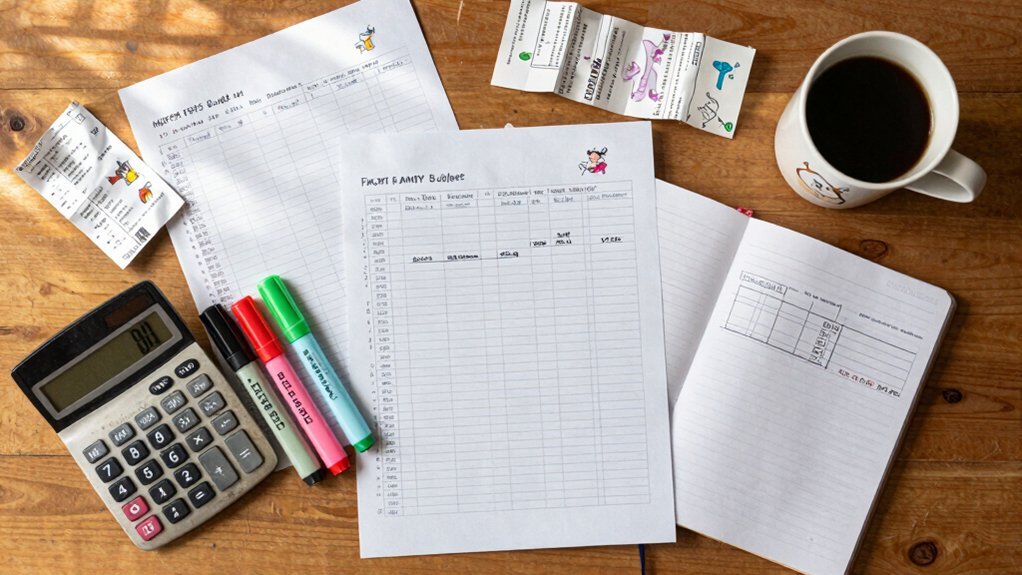
How many financial decisions stem from obligation rather than genuine preference? Parents often spend money on activities, subscriptions, and purchases because they believe they should, not because these expenses align with their values.
The first step toward financial clarity involves identifying what truly matters. Does the family prioritize experiences together, educational opportunities, or financial security? Once these genuine priorities emerge, guilt-driven spending becomes easier to eliminate.
Parents frequently maintain expenses inherited from previous life stages or social expectations. Recognizing this pattern creates space for honest assessment. Redirecting funds from obligatory spending toward authentic priorities produces tangible relief and improved financial outcomes.
This deliberate process transforms budgeting from restrictive to purposeful, allowing families to allocate resources according to what genuinely enhances their lives rather than what guilt dictates.
Start Tracking Your Real Money (One Month Only)
Before committing to a long-term budget, families benefit from a single month of honest spending documentation. This baseline reveals actual habits rather than assumed ones.
Families should track every expense—groceries, subscriptions, coffee runs, and impulse purchases. Writing down or photographing receipts prevents selective memory about spending. The goal isn’t perfection but accuracy.
After thirty days, patterns emerge. Categories show where money genuinely goes versus where families think it goes. These discrepancies often surprise parents.
Armed with real data, families can identify legitimate priorities and unnecessary expenses. This month-long snapshot becomes the foundation for realistic budgeting decisions moving forward, eliminating guesswork and replacing it with evidence-based planning.
Budget Your Groceries Like Your Mum Did
Generations of families have relied on simple grocery strategies that kept food costs manageable without requiring spreadsheets or apps. The traditional approach involves planning meals around sales and seasonal produce rather than building menus first. Shoppers write lists before entering stores, preventing impulse purchases that inflate budgets. Buying store brands instead of name brands reduces expenses considerably. Purchasing proteins in bulk and freezing portions extends affordability. Checking pantry inventory prevents duplicate purchases. Avoiding pre-packaged convenience foods saves money while encouraging healthier eating habits. This methodical approach requires minimal time investment but yields substantial savings. Families implementing these practices discover that disciplined grocery shopping frees resources for other financial priorities without sacrificing nutrition or meal quality.
Use the Envelope Method (It Still Works)
The envelope system remains one of the most effective budgeting tools available, despite its simplicity and age. Families allocate cash into physical envelopes designated for specific spending categories: groceries, utilities, entertainment, and transportation. Once an envelope empties, spending in that category stops until the next budgeting period.
This tangible approach forces conscious decision-making. Unlike digital transactions that feel abstract, handing over physical money creates psychological resistance to overspending. The visual depletion of cash reinforces budget awareness.
The method works particularly well for variable expenses like groceries and discretionary spending. It eliminates temptation to exceed limits and prevents overage fees associated with cards. Families who adopt this system typically spend less while maintaining better financial awareness throughout the month.
Negotiate Bills Without Feeling Like a Nuisance
Many families overlook a straightforward opportunity to reduce monthly expenses: negotiating their bills. Most service providers expect customers to call and request better rates, especially those with reliable payment histories.
When contacting insurance companies, internet providers, or phone services, families should gather competing quotes beforehand. This ammunition strengthens negotiating positions considerably. Speaking with retention departments yields better results than general customer service lines.
The conversation requires directness: state the desired rate or threaten switching providers. Most companies offer loyalty discounts, promotional rates, or bundled packages to retain customers. Even modest reductions—$10 to $20 monthly—accumulate substantially over time.
Families should schedule annual bill reviews. Companies frequently introduce new plans or promotions that existing customers don’t automatically receive. This systematic approach transforms bill negotiation from occasional hassle into routine financial maintenance.
Feed and Clothe Your Kids on Less
While bill negotiation addresses fixed monthly expenses, feeding and clothing children requires a different strategy—one focused on maximizing purchasing power within the grocery store and retail environment. Parents can reduce food costs by planning meals around sales, buying generic brands, and purchasing seasonal produce. Bulk buying staples offers significant savings, though storage space matters. Clothing expenses drop considerably through secondhand shops, hand-me-downs between siblings, and end-of-season clearance purchases. Quality basics outlast trendy items, reducing replacement frequency. Food waste elimination—through proper storage and creative leftover use—directly impacts grocery budgets. Thrift stores and community clothing swaps provide affordable alternatives to retail prices. These practical approaches allow families to maintain adequate nutrition and appropriate dress without sacrificing financial stability.
Build Your Tiny Emergency Fund First
After establishing sustainable spending patterns through bill negotiation and reduced food costs, families should prioritize building a small emergency reserve before tackling larger financial goals. A modest fund of £500–£1,000 provides vital protection against unexpected expenses like car repairs or medical costs that could otherwise derail the household budget.
Starting small makes this achievable. Families can allocate £10–£25 weekly from their newly optimized spending, accumulating the reserve within months rather than years. This accessible target removes the intimidation factor many experience when considering emergency savings.
Once established, this buffer eliminates reliance on high-interest credit cards during crises. It also builds financial confidence and demonstrates that disciplined budgeting produces tangible results, motivating families to pursue subsequent objectives like debt reduction or longer-term savings goals.
Automate Payments, Manage the Rest
Setting up automatic payments for fixed expenses transforms household finances by removing decision fatigue and human error from routine transactions. Families should prioritize automating bills with consistent amounts—mortgages, insurance, utilities, and loan payments—directly from their bank accounts on designated dates.
This approach guarantees critical obligations never slip through cracks while freeing mental energy for discretionary spending decisions. Variable expenses, however, require manual management. Groceries, dining out, and entertainment purchases benefit from conscious evaluation each month, allowing families to adjust spending based on current priorities and unexpected circumstances.
The combination of automated stability and manual flexibility creates a balanced system. Households maintain control where it matters most while minimizing stress surrounding routine obligations, ultimately supporting sustainable financial management and reducing late fees.
Pay Yourself First: Without Breaking Your Budget
The principle of paying yourself first—allocating savings before discretionary spending—often intimidates families operating on tight budgets who perceive it as an additional expense rather than a financial priority. However, this approach doesn’t require large amounts. Starting with modest contributions, even £10-20 weekly, builds financial resilience without straining household cash flow.
The strategy involves treating savings as a non-negotiable bill, paid immediately after income arrives. By automating transfers to a separate savings account before accessing remaining funds, families remove temptation and establish consistent accumulation. This small discipline creates an emergency buffer, reducing reliance on debt during unexpected expenses.
Over time, these incremental contributions compound, providing genuine financial security. The key lies in beginning small and viewing savings as essential maintenance rather than luxury.
When Your Budget Breaks: What Comes Next
Despite meticulous planning, unexpected circumstances—job loss, medical emergencies, or major repairs—can render even well-constructed budgets obsolete. When this occurs, families must act decisively.
First, assess the situation’s severity and duration. Distinguish between temporary disruptions and prolonged financial strain. Next, review the budget immediately, identifying essential expenses that cannot be reduced. Utilities, housing, and food take priority over discretionary spending.
Tap emergency savings strategically, preserving funds for genuine crises. Consider temporary income solutions: freelance work, selling unused items, or part-time employment. Contact creditors proactively; many offer hardship programs or payment modifications.
Once stability returns, rebuild the emergency fund and adjust the budget based on lessons learned. Document what failed and why. This analysis transforms financial disruption into valuable knowledge for future resilience.
Conclusion
The “Budget Like a Mum” approach transforms family finances through discipline and intentionality. By tracking spending, prioritizing values, and implementing practical strategies—from grocery planning to bill negotiation—families establish sustainable financial habits. The framework emphasizes building resilience through small emergency funds and automated systems. Ultimately, this no-nonsense methodology cultivates long-term financial confidence, enabling households to navigate economic uncertainty while maintaining stability and purpose.