
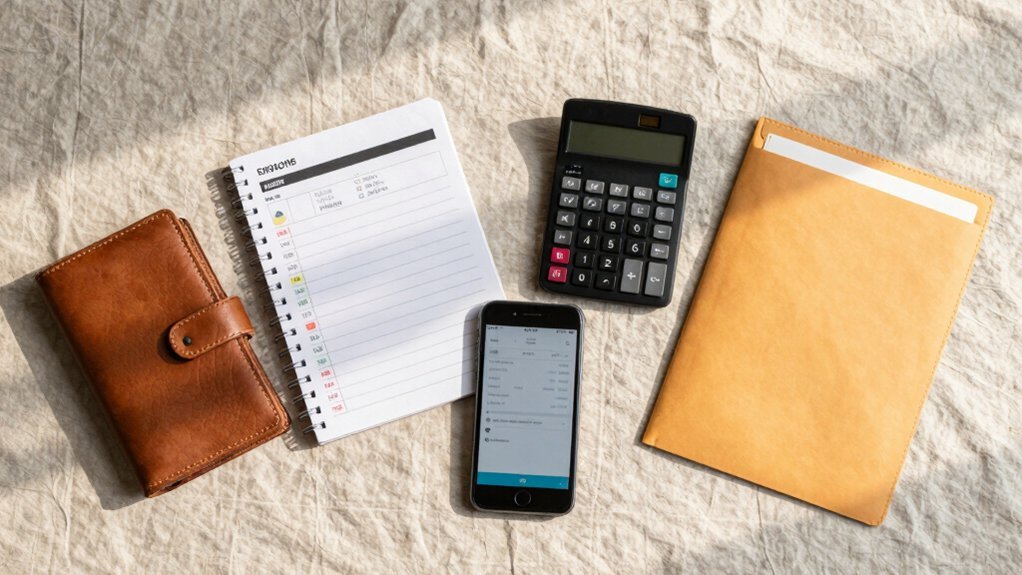
Managing finances effectively requires more than good intentions. The 50/30/20 Rule, Zero-Based Budgeting, Pay-Yourself-First Method, and Envelope System each offer distinct advantages for different financial situations. Yet choosing the wrong approach can undermine progress entirely. The key lies in understanding how each method works and which aligns with individual spending habits and goals.
Split Your Income Into Three Simple Buckets: The 50/30/20 Rule

The 50/30/20 rule divides monthly after-tax income into three spending categories: fifty percent for needs, thirty percent for wants, and twenty percent for savings and debt repayment. This framework provides a straightforward approach to financial management without requiring complex calculations or tracking systems.
The needs category encompasses essential expenses like housing, utilities, groceries, and transportation. Wants include discretionary spending on entertainment, dining out, and hobbies. The savings portion addresses emergency funds, retirement contributions, and debt elimination.
This method appeals to individuals seeking simplicity and flexibility. Those earning irregular income or facing substantial fixed costs may find the percentages require adjustment. Despite potential limitations, the 50/30/20 rule offers an accessible entry point for budgeting beginners seeking structured financial guidance.
Give Every Dollar a Job: The Zero-Based Budget
Unlike percentage-based approaches, zero-based budgeting assigns every dollar of income to a specific expense, savings goal, or debt payment until the budget reaches zero. This method requires individuals to account for all money, eliminating untracked spending and promoting intentional financial decisions.
The process begins with listing total income, then systematically allocating funds to categories: housing, utilities, groceries, transportation, and discretionary items. Once all income is distributed, the budget balances at zero, meaning no money remains unaccounted for.
Zero-based budgeting demands discipline and attention to detail but provides clarity on where money flows. It suits those seeking control over finances and aiming to eliminate wasteful spending. The method proves particularly effective for identifying overspending areas and aligning expenditures with personal priorities and financial objectives.
Build Savings on Autopilot: The Pay-Yourself-First Method
Prioritizing savings before allocating funds to expenses forms the foundation of the pay-yourself-first method, a strategy that reverses traditional spending patterns. Rather than saving leftover money after bills and discretionary purchases, individuals commit a predetermined percentage of income to savings accounts immediately upon receiving payment.
This automated approach eliminates decision-making barriers and reduces temptation to spend earmarked funds. By establishing automatic transfers to dedicated savings accounts, users build financial reserves without conscious effort or willpower constraints.
The method encourages consistent wealth accumulation while maintaining adequate cash flow for essential expenses. Whether funding emergency funds, retirement accounts, or investment portfolios, the pay-yourself-first approach prioritizes financial security and long-term stability. This proactive strategy transforms saving from an afterthought into a non-negotiable financial priority.
Use Envelopes to Stop Overspending: The Envelope System
While the pay-yourself-first method automates savings through direct deposits, the envelope system takes a more tactile approach to controlling spending by allocating physical or designated funds to specific expense categories. Users withdraw cash and distribute it into envelopes labeled for groceries, entertainment, transportation, and other regular expenses. This method creates immediate visibility into available funds and prevents overspending, since once an envelope is empty, spending in that category stops.
The envelope system works effectively because it enforces accountability through tangible constraints. Digital versions replicate this approach using separate accounts or budgeting apps. By maintaining strict category limits, individuals naturally become more conscious of their purchasing decisions and reduce unnecessary expenditures. This straightforward technique has proven particularly valuable for those struggling with impulse buying.
Which Budgeting Method Works Best for You?
How does one select a budgeting approach suited to individual circumstances and temperament? The answer depends on several personal factors. Individuals with irregular income may prefer the zero-based method, allocating every dollar intentionally. Those seeking simplicity benefit from the 50/30/20 rule, dividing after-tax income into needs, wants, and savings. People prone to overspending find the envelope system effective due to its tangible spending limits. Digital-savvy individuals might embrace app-based tracking for real-time monitoring. Couples should consider joint versus individual approaches based on their financial dynamics. Working professionals with limited time might opt for automated transfers to savings accounts, minimizing active management. The ideal method aligns with one’s lifestyle, spending habits, income stability, and financial goals, requiring honest self-assessment before implementation.
Conclusion
Each budgeting method addresses different financial priorities and personal preferences. The 50/30/20 Rule provides simplicity through income division, while Zero-Based Budgeting demands meticulous tracking. The Pay-Yourself-First Method and Envelope System suit those prioritizing savings or cash spending limits. Success depends on matching methodology to individual habits and goals. Experimenting with multiple approaches helps identify which framework best sustains long-term financial discipline and achieves desired outcomes.